Free therapy template

Treatment Plan Template for Therapists

Problems, goals, measurable objectives with target dates, and the interventions you will use. Edit the Word file with your client, or start from the filled-in anxiety plan.

Free · DOCX and PDF · No signup · Fictional client

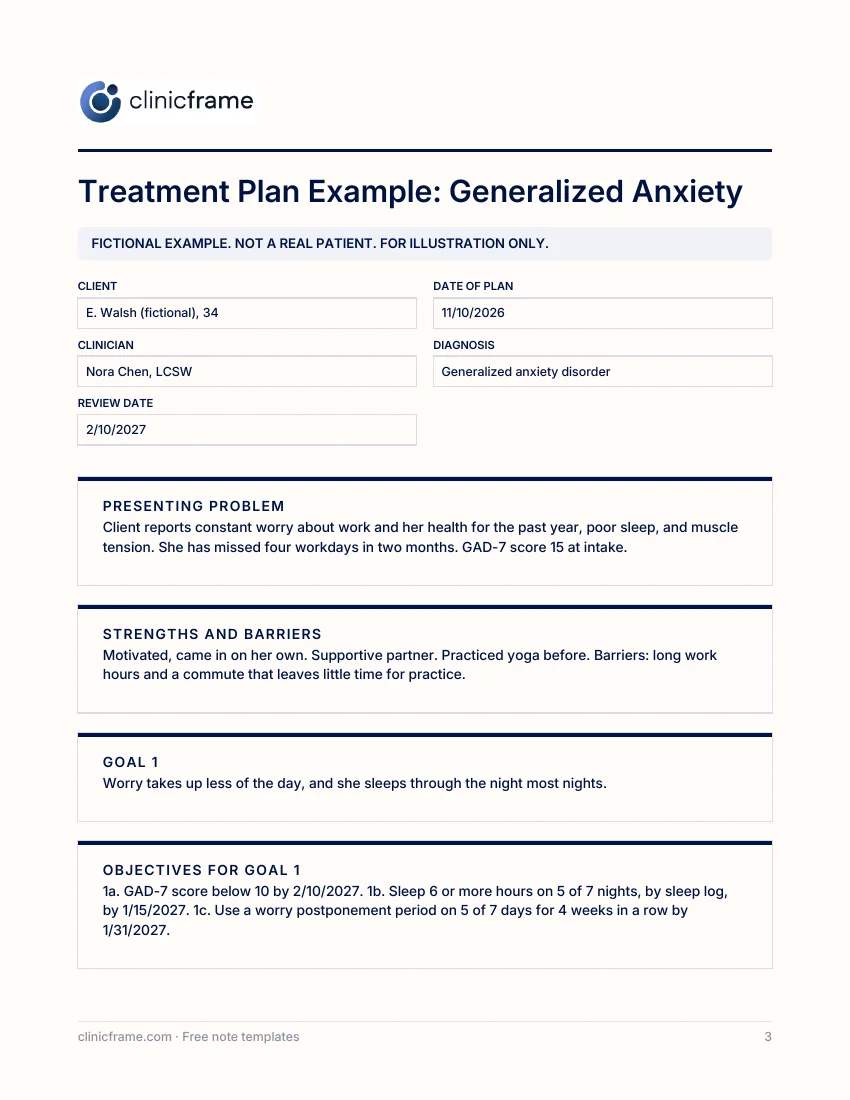
A filled-in treatment plan example for a fictional client with generalized anxiety, from the ClinicFrame template, with presenting problem, goals, and objectives

What a Treatment Plan Includes

A plan a reviewer can follow has six parts. Each part answers a question that the progress notes will keep coming back to.

  • Presenting problem

    Why the client came in and how it affects work, sleep, relationships, or self-care. Include a baseline score when you use a standard measure.

  • Goals

    The broad change the client wants, in plain words. One goal per problem is usually enough.

  • Objectives

    Measurable steps toward each goal, each with a number and a target date.

  • Interventions

    What you will do: the modality, the techniques, and how often.

  • Frequency and discharge

    Visit length and frequency, expected duration, and what will tell you treatment is done.

  • Review and signatures

    The next review date, and signatures from the client and clinician showing the plan was written together.

Template

Treatment Plan Template

Each problem becomes a ladder: one goal, two or three objectives with dates, and the interventions that serve them. Copy the ladder for each problem on the plan.

Client
Date of plan
Clinician
Diagnosis
Review date

Problem 1

Why the client came in and how it affects daily life, in a few sentences.

Goal 1

The long-term change the client wants, in plain language.

Objectives for goal 1

Objectives for goal 1, blank
#Objective, with a numberHow it is measuredTarget date
1a
1b
1c

Interventions for goal 1

What the clinician will do, with the modality and how often.

  • Strengths and barriers

    What will help the work (supports, skills, motivation) and what may get in the way.

  • Frequency and discharge

    Visit frequency and length, expected duration, and what tells you treatment is done.

  • Signatures

    Client and clinician signatures and dates. Note that the client took part in writing the plan.

Free, no signup. Both files include the anxiety plan below as a completed example.

Example

Example: A Plan for Generalized Anxiety

E. Walsh (fictional), 34, plan dated 11/10/2026 by Nora Chen, LCSW. Client reports constant worry about work and her health for the past year, poor sleep, and muscle tension. She has missed four workdays in two months. GAD-7 score 15 at intake. Goal 1: worry takes up less of the day, and she sleeps through the night most nights.

Measurable objectives in the fictional generalized anxiety treatment plan
ObjectiveHow it is measuredTarget date
1a. GAD-7 score below 10GAD-7 at each monthly review2/10/2027
1b. Sleep 6 or more hours on 5 of 7 nightsClient's sleep log1/15/2027
1c. Worry postponement on 5 of 7 days, 4 weeks in a rowWorry log reviewed each visit1/31/2027
2a. At most one missed workday a month for 3 monthsClient report of missed days2/10/2027

Interventions: Cognitive behavioral therapy, weekly. Psychoeducation on the worry cycle. Worry postponement and cognitive restructuring. Progressive muscle relaxation taught in the visit and assigned as homework. Review date 2/10/2027. Fictional client, for illustration only.

Writing tips

Writing Measurable Goals and Objectives

A reviewer should be able to read an objective and tell, on the target date, whether it was met. If they cannot, rewrite it.

Can be checked

Measurable

A number, a way to measure it, and a date.

  • GAD-7 score below 10 by 2/10/2027.
  • Sleeps 6 or more hours on 5 of 7 nights, by sleep log.
  • Rides the subway to work 3 days a week for 4 weeks.
  • Names 3 coping skills and uses one during each panic episode, per log.
  • Attends 10 of 12 weekly visits.
Cannot be checked

Vague

Sounds right, but nobody can say when it is done.

  • Reduce anxiety.
  • Improve sleep.
  • Feel more confident.
  • Learn coping skills.
  • Engage in therapy.

Keep goals in the client's own words. Put the numbers in the objectives.

Plans and notes

Update the Plan From Your Progress Notes

Progress notes are where objectives get measured. Write them against the plan, visit by visit, with the progress note template or the AI progress note generator, which writes the note from a recorded visit or your dictation.

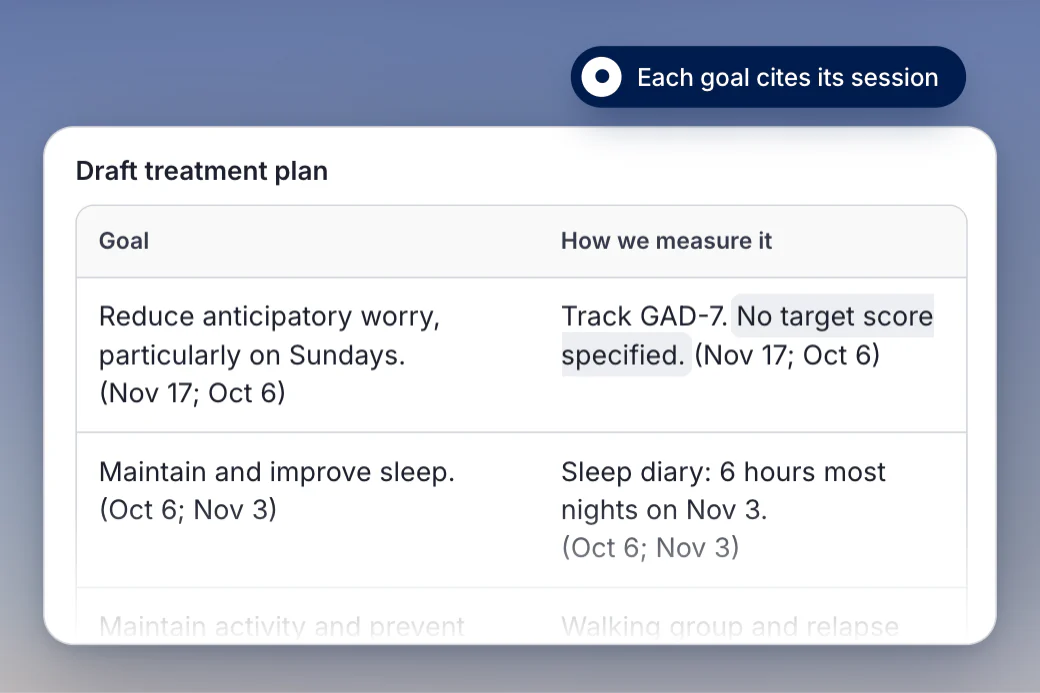
When the review date comes, the ClinicFrame treatment plan generator drafts the updated plan from your visit notes. Each goal cites the visit it came from, and anything the notes do not say stays marked for you. It does not choose goals or treatments. You edit and sign the plan.

ClinicFrame chat with a treatment plan draft built from four visit notes for a synthetic client, each section citing the visit it came from
A treatment plan draft that cites the visit each goal came from.
FAQs

Frequently Asked Questions

Short answers about treatment plans for therapists and counselors.

How often should a treatment plan be updated?

Review it on the date you set in the plan, often every 90 days, and whenever something important changes: a new problem, a goal met, a crisis, or a change in level of care. Many payers and state rules set their own review interval, so check yours and write the next review date on the plan.

What is the difference between goals and objectives?

A goal is the broad change the client wants, in plain words, such as worrying less and sleeping through the night. An objective is a measurable step toward it, with a number and a date, such as a GAD-7 score below 10 by February 10. Each goal usually has two or three objectives.

Does the client sign the treatment plan?

In most settings, yes. The plan is written with the client, and their signature shows they took part and agree with the goals. Note in the plan if the client declined to sign and why.

What are interventions in a treatment plan?

Interventions are what the clinician will do to help the client reach each objective: the modality, the specific techniques, and how often. For example, cognitive behavioral therapy weekly, with worry postponement and relaxation training assigned as homework.

Write the plan once.
Keep it current from your notes.

Free plan, no credit card, signed BAA included.

Updated