
Free veterinary template

Veterinary SOAP Notes Template and Example

A SOAP record built for animal patients: signalment and weight at the top, the owner's history, your exam by body system, and a plan the owner can follow at home.

Free · PDF and Word · No signup · Two fictional examples included

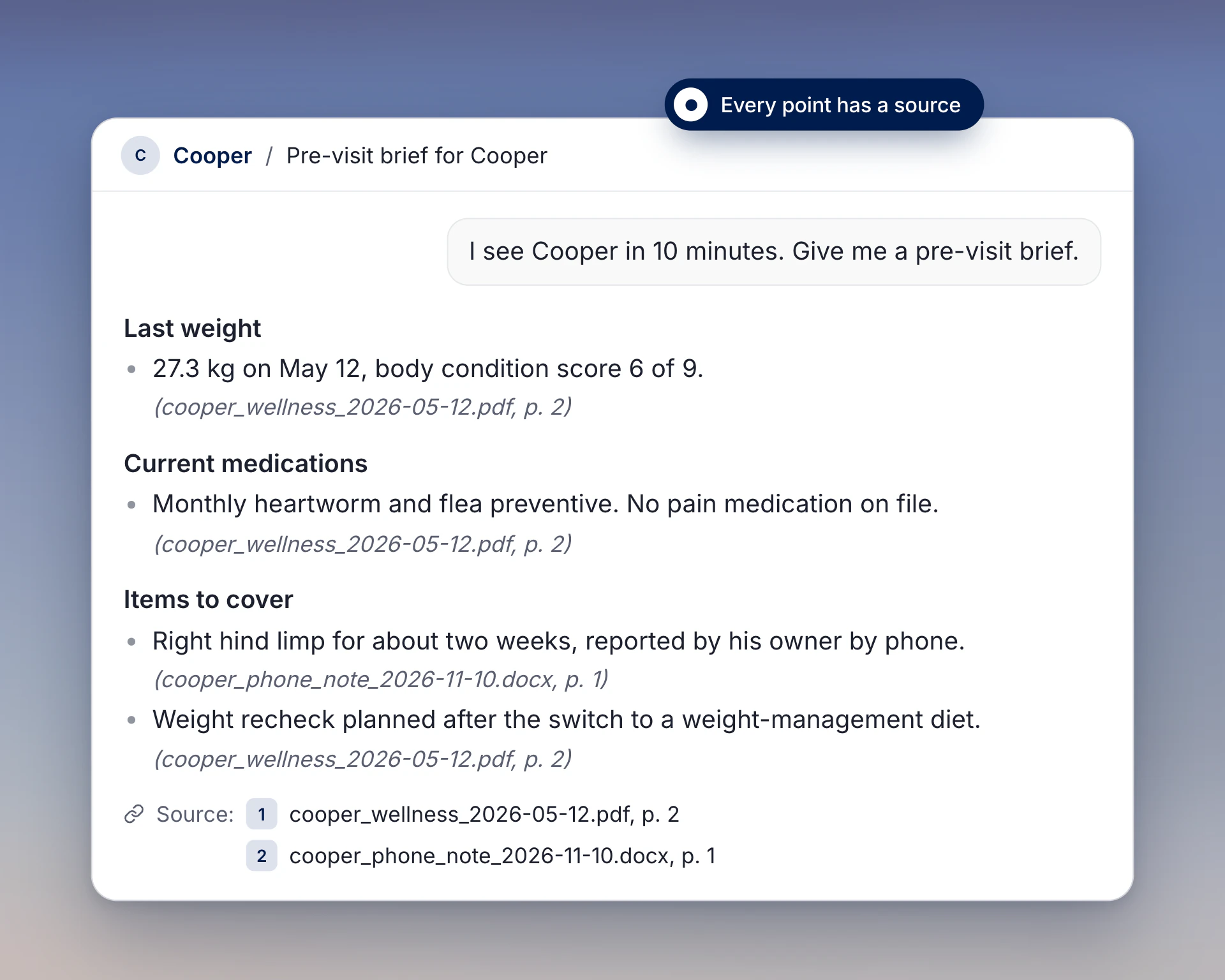
ClinicFrame pre-visit brief for a fictional dog named Cooper, with last weight, body condition score, current medications, and the owner's report of a hind limb limp

What Goes in a Veterinary SOAP Note

Same four letters as in human medicine. What changes is who gives the history, what you measure every time, and who carries out the plan.

Header
Veterinary SOAPSignalment: species, breed, age, sex and reproductive status, plus the owner's nameHuman medicine SOAPPatient name, date of birth, and identifiers
Subjective
Veterinary SOAPHistory from the owner: appetite, water intake, energy, vomiting or diarrhea, diet, medicationsHuman medicine SOAPHistory from the patient in their own words
Objective
Veterinary SOAPTemperature, pulse, respiration, weight, body condition score, exam by body system, in-house test resultsHuman medicine SOAPVital signs, exam findings, and results
Assessment
Veterinary SOAPProblem list and differential diagnoses, often before diagnostics confirm themHuman medicine SOAPDiagnosis or differential, with clinical reasoning
Plan
Veterinary SOAPDiagnostics, drug, dose and route, home care for the owner, the owner's consent, and the recheck dateHuman medicine SOAPTreatment, orders, referrals, and follow-up

Veterinary SOAP Note Template

Fill the patient card at check-in, then one block per letter. Weight goes on the card every visit, so a gain or loss shows before anyone opens the history.

Patient record

Patient
Species and breed
Age and sex
Weight
Owner
Veterinarian
  1. Subjective

    Reason for the visit and history from the owner: appetite, water intake, energy, vomiting or diarrhea, medications, diet.

  2. Objective

    Temperature, pulse, respiration, weight, body condition score, and exam findings by body system. Results of any tests run today.

  3. Assessment

    Problem list, differential diagnoses or a confirmed diagnosis, and how sure you are.

  4. Plan

    Diagnostics, treatment with dose and route, what you told the owner, and when to recheck.

Download the PDFDownload for Word (DOCX)

Both files include the canine and feline examples below, marked as fictional.

Example: A Canine Wellness Visit

A yearly checkup for a healthy four-year-old Labrador. Nothing is wrong, so the record has one job: show what changed since last year.

Here that is the weight. Biscuit gained 2.4 kg and scores 7 out of 9 for body condition. The plan turns that into a feeding amount and a date to weigh him again.

SOAP · Biscuit (fictional)Wellness

Subjective. Annual wellness visit. Owner reports normal appetite and energy, no vomiting or diarrhea. Eats 3 cups of adult kibble a day plus treats. On monthly heartworm and flea prevention. Owner noticed he is slower on long walks. Owner

Objective. T 101.3 F, HR 96, RR 24. BCS 7/9. Eyes, ears, and mouth normal, mild tartar on upper premolars. Heart and lungs normal on auscultation. Abdomen soft, nonpainful. No lameness. Heartworm antigen test negative. Exam

Assessment. Healthy adult dog. Overweight, BCS 7/9, gained 2.4 kg in a year. Mild dental tartar. Today

Plan. Rabies and DHPP boosters given. Reduce food to 2.5 cups a day, cut treats in half, target weight 30 kg. Weight check in 8 weeks. Discuss a dental cleaning at the next visit. Owner agreed to the plan. Today
Canine, Labrador Retriever, 4 years, male neutered, 34.2 kg (last year 31.8 kg). Fictional patient and owner. For illustration only.

Sick visit

Example: A Feline Sick Visit

A nine-year-old cat with vomiting, weight loss, and more thirst than usual. The owner's phone call that morning becomes the subjective section. The exam and the bloodwork order fill the rest.

The assessment lists differential diagnoses instead of one answer, because the labs are not back yet. The plan says when the owner will hear the results.

Showing: the draft

Fictional patient and owner. For illustration only.

SOAP · Miso (fictional)

Feline, domestic shorthair, 9 years, female spayed, 4.1 kg (6 months ago 4.6 kg)

Subjective

Vomiting three times in the last two days, food each time. Eating about half her usual amount. Drinking more water than usual for a month, owner refills the bowl twice a day now. Indoor only. No new foods or plants in the house.

Objective

T 101.8 F, HR 190, RR 30. BCS 4/9. Mild dehydration, skin tent slightly prolonged. Thyroid slip palpable on the left. Heart murmur grade 2/6. Abdomen soft, no masses felt. Blood drawn for CBC, chemistry, total T4, and urinalysis.

Assessment

Weight loss, vomiting, and increased thirst. Differentials: hyperthyroidism, chronic kidney disease, diabetes mellitus, gastrointestinal disease. Murmur noted, likely related but not confirmed.

Plan

Subcutaneous fluids 150 mL given. Maropitant 1 mg/kg SC given today. Owner to offer small meals four times a day. Results by phone tomorrow. Recheck in 1 week or sooner if vomiting continues or she stops eating.

Veterinary records

Let ClinicFrame Write Your SOAP Records

ClinicFrame is a veterinary AI scribe that drafts the SOAP record from the appointment you narrate. Say the species, weight, and findings out loud and they land in the right section. You review and sign every record, then copy it into your practice software or export it as a PDF.

There is no built-in veterinary template, so upload a record you already use and build yours from it. The same AI progress note generator writes the generic SOAP note template format too. For the whole practice, see AI for veterinarians.

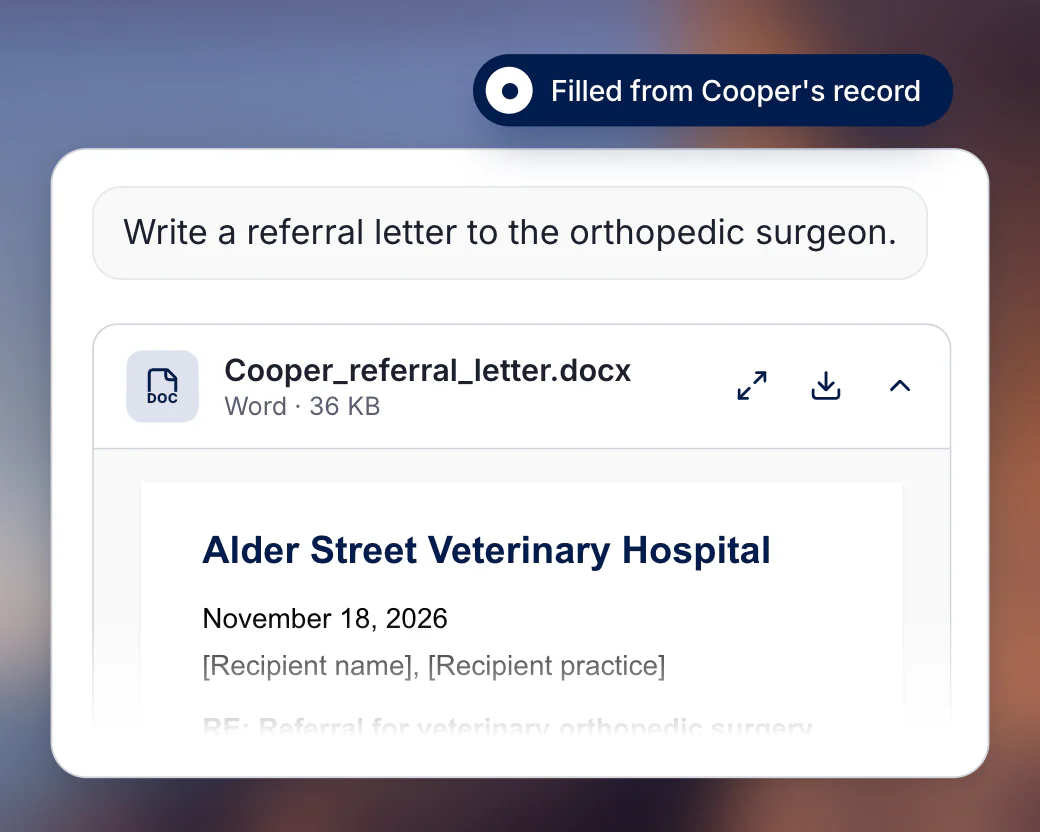
ClinicFrame drafting a referral letter to an orthopedic surgeon from a fictional dog's lameness exam record, returned as a Word file
A referral letter for a fictional dog, filled from his record.
FAQs

Frequently Asked Questions

Short answers about SOAP records in veterinary practice.

What is the difference between a vet SOAP and a medical SOAP?

The four sections are the same. A veterinary SOAP adds the signalment (species, breed, age, sex, and reproductive status), records weight and body condition score at every visit, and takes the history from the owner instead of the patient. The plan also covers what the owner was told and agreed to, since the owner carries out most of the treatment at home.

What is a body condition score in a SOAP note?

It is a number that rates how much fat the animal carries, most often on a 9-point scale where 4 or 5 is ideal. It goes in the objective section next to the weight, because weight alone does not show whether a dog or cat is too heavy for its frame.

Should the owner's words go in the subjective section?

Yes. Record what the owner reports, and quote them when the exact words matter, such as how often a cat vomits or when the limp started. Keep your own findings out of that section. They belong in the objective section, where a reader can tell what you saw from what you were told.

Do I need to write the dose in the plan?

Yes. Write the drug, dose, route, frequency, and duration, plus any diagnostics ordered and the recheck date. A colleague who sees the patient next should be able to continue the plan from the record alone.

Finish the record
before the next appointment.

Free plan, no credit card.

Updated