01
HIPAA compliant
Encryption in transit and at rest, access controls and audit logs, on infrastructure built for protected health information.

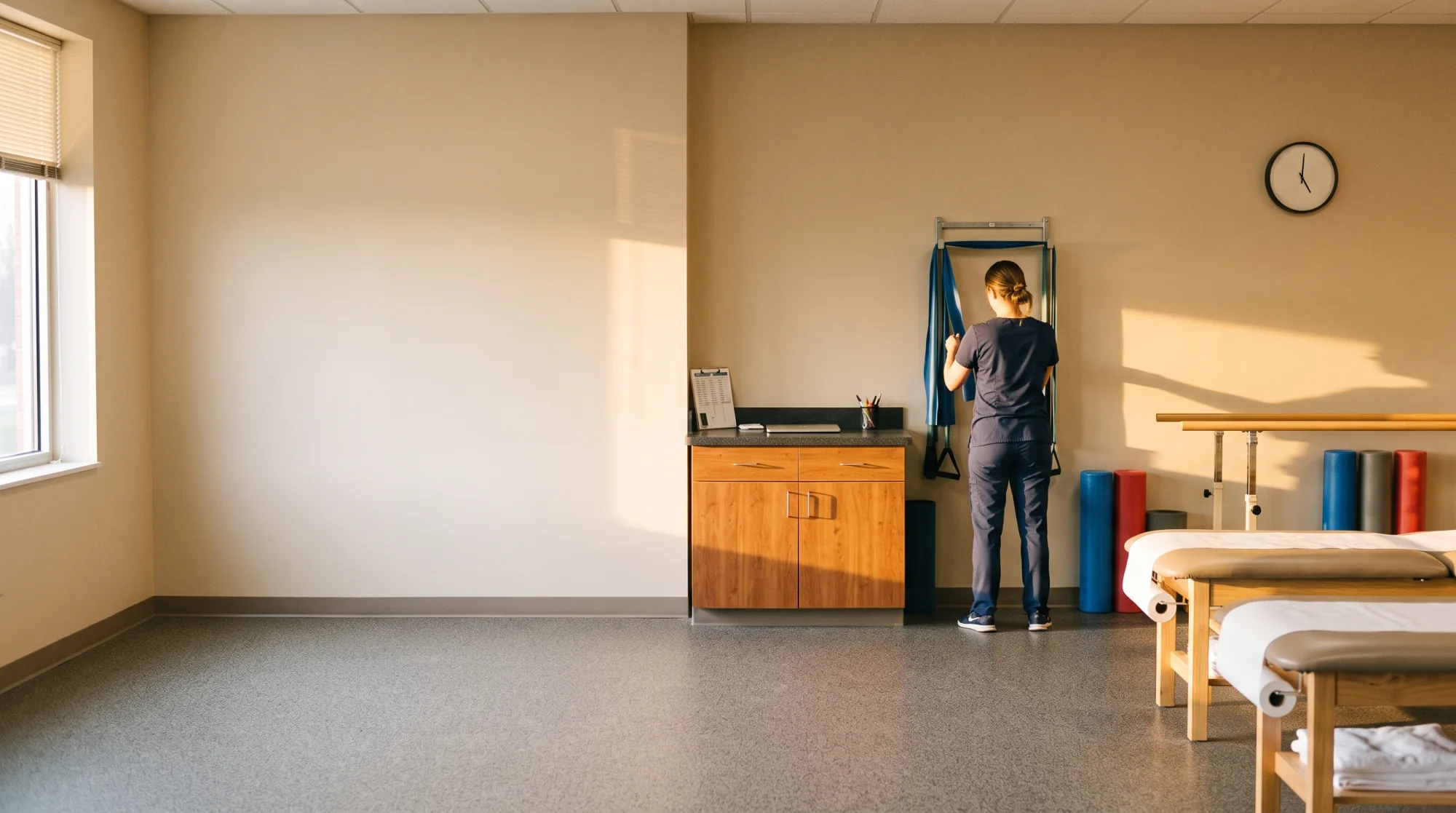
Medical necessity is reviewed more closely in physical therapy than in most specialties, and the whole argument lives in the documentation: the measurements, the skilled intervention, the response, the progress toward a specific goal. That is a lot to reconstruct from memory after nine patients, and reconstructed notes start to read the same every time, which is exactly what a reviewer denies.

Encryption in transit and at rest, access controls and audit logs, on infrastructure built for protected health information.
A Business Associate Agreement is included with your account, including the free trial. Complete the agreement before entering patient information.
Visit audio is processed and discarded. Your account retains the transcript, notes, and patient information used in your documentation workflow.
Your patients’ information is not used to train AI models. The agreement with ClinicFrame describes the commitments for handling patient content.
Outpatient, home health, and rehabilitation notes support different plans of care. ClinicFrame keeps the measurements and skilled intervention visible.
DPT, private and clinic practice
In-home therapy
Skilled nursing and acute rehab
Athletes, return to play
Specialized practice
Occupational and speech-language
Direct pay, no insurance
Teams across locations
Build a custom template when your clinic requires different sections or instructions.
Physical therapy is documented against goals and reviewed for medical necessity more closely than most specialties. These three carry that argument.
History, objective measurements, functional limitations, clinical reasoning, goals with timeframes and the plan of care. The longest document in a PT episode and the one everything after refers back to.
What comes backAn evaluation with objective measures, functional limitations, goals and plan of care.
What you did, with what parameters, how the patient responded and progress toward each goal. Plus the minutes and modalities that billing depends on.
What comes backA treatment note with interventions, parameters, response and progress per goal.
Measurements compared against the initial evaluation, goals met and unmet, and the reasoning for continuing, changing or discharging. The document a payer reads when deciding on more visits.
What comes backA comparison against baseline, goal status and the reasoning for the next phase.
What comes back
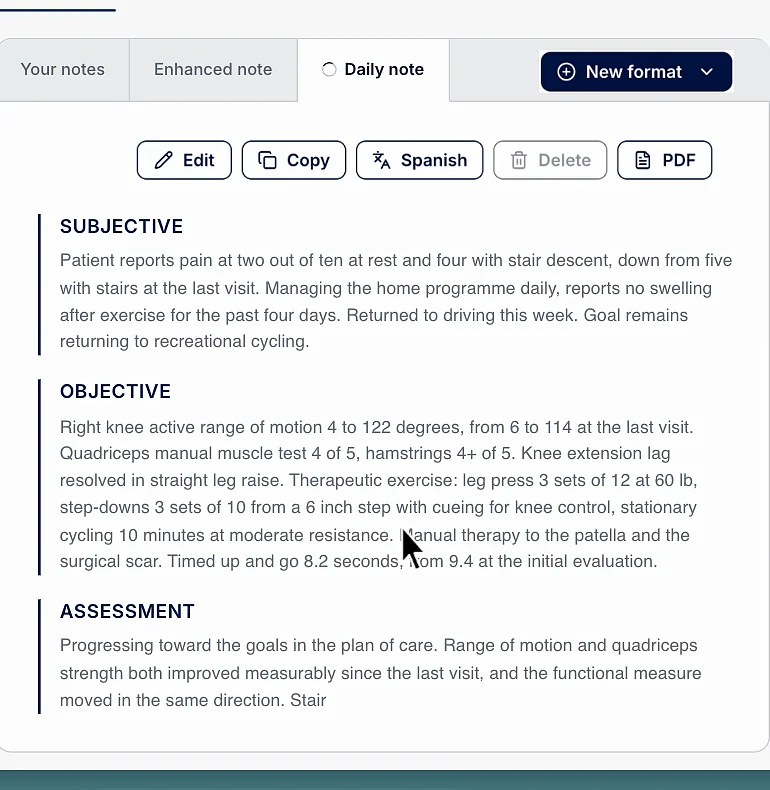
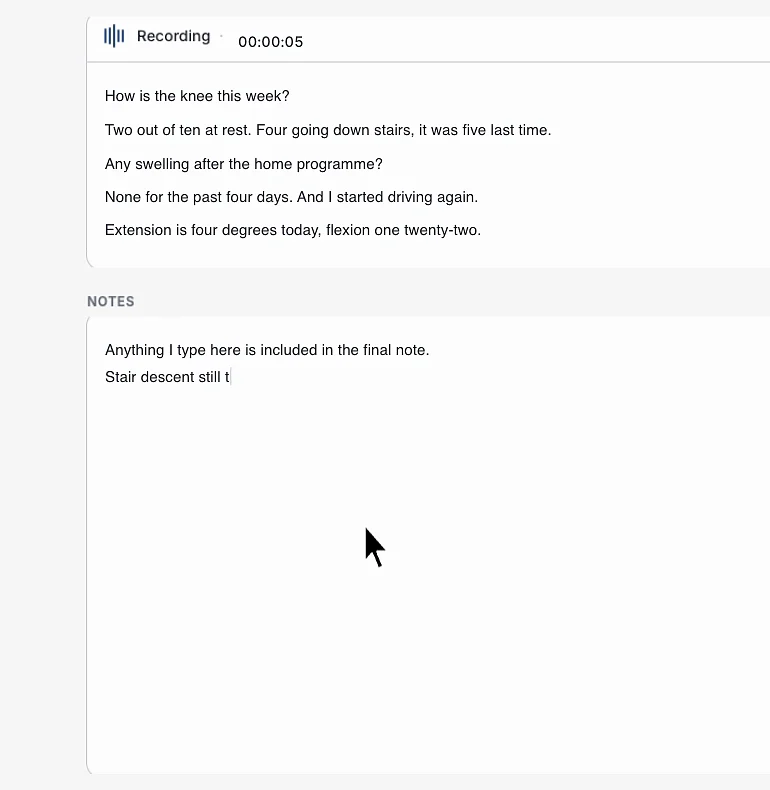
Visit eight of an authorized episode, post-operative knee. The measurements come from what you called out while your hands were busy.
This is how it transcribes
Illustrative example. No real patient data. Degrees, grades, sets and reps are transcribed exactly as you state them and are never estimated for you. You review and sign every note.
Start with a 7-day free trial, no card needed. Then one simple plan at $34.99 a month, with every feature included and nothing held back for a higher price.
7-day trial
7 days free · no card
No credit card required.
Monthly
per user, billed monthly
No hidden fees. Cancel anytime.
Yes. Subjective from the patient's report, objective from the measurements you call out during the session, assessment with your clinical reasoning, and plan. You can also build your own structure if your clinic documents differently, and set it as your default.
Measurements are captured as you say them, including degrees of range of motion and manual muscle test grades. Saying them out loud during the session is faster than typing them after, and it is what you already do when working with an aide or a student.
ClinicFrame structures objective measurements, functional limitations, skilled interventions, patient response, and progress toward goals. These details support your medical necessity documentation. The payer and plan of care determine coverage.
That is the intended use. Manual therapy leaves no hands for a keyboard, so you narrate what you are finding and doing the way you already would, and it becomes the note. Nothing needs to be typed during the session.
ClinicFrame saves the session while it runs. If the connection drops during a home visit, return to the saved transcript and continue. You can also dictate in the car after the visit.
Yes, and both are treated as their own disciplines rather than a variation on PT. ADL performance, swallowing and communication goals are documented in the measures those fields use, and a multidisciplinary team can share one structure.
ClinicFrame processes session audio and discards it. Your account retains the transcript, note, and patient information used in your workflow. Patient content is not used to train AI models, and a BAA is included with every account.
That is the failure mode this is meant to avoid. Each note is generated from that session, so the specific measurements, parameters and responses stay in it. Weeks of copy-pasted daily notes is one of the most common reasons continued care gets denied.
Someone from our team will contact you.