ClinicFrame on Product HuntClinicFrame Scribe is live on Product Hunt.Like Granola, but for healthcare. Fully HIPAA-compliant.Support us
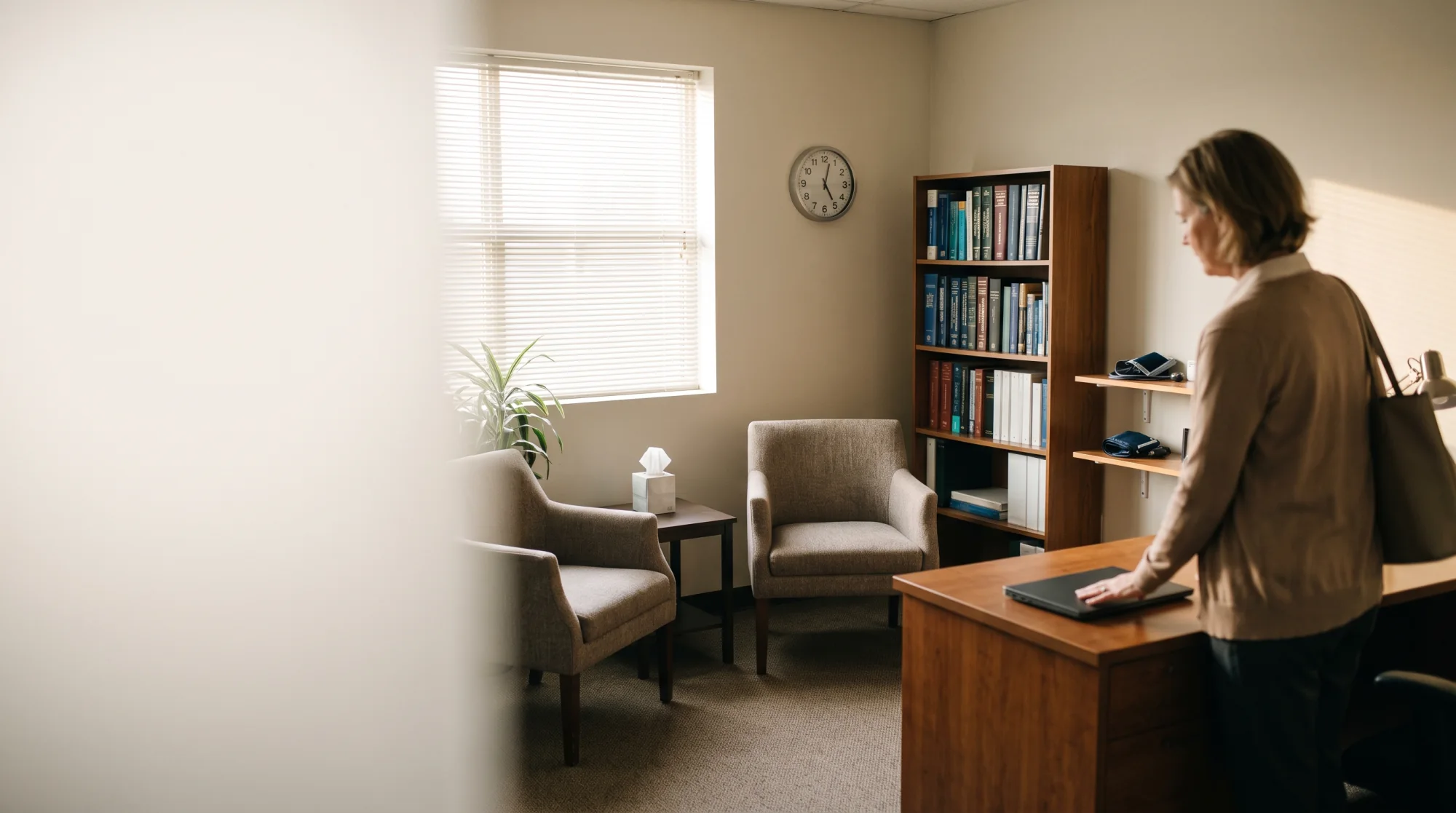
A psychiatrist standing at her desk with one hand on a closed laptop, ready to leave, the two chairs of the consulting room empty and the wall clock past five.

AI psychiatry notes and mental status exams

You make the call.
We do the mental status exam.

ClinicFrame writes the psychiatric note from the visit: mental status exam, medication reconciliation, risk and plan. For twenty-minute med checks and ninety-minute intakes, in person or on telepsychiatry.

Try it for freeNo credit card. 7 days free.
The math of a full panel

Twenty-four visits. Twenty-four notes waiting.

A med check runs twenty minutes and the note that follows it takes five to ten. Multiply that by a full panel and the arithmetic stops working: the documentation from a single clinic day outlasts the clinic day. So it moves to the evening, where it competes with everything else.

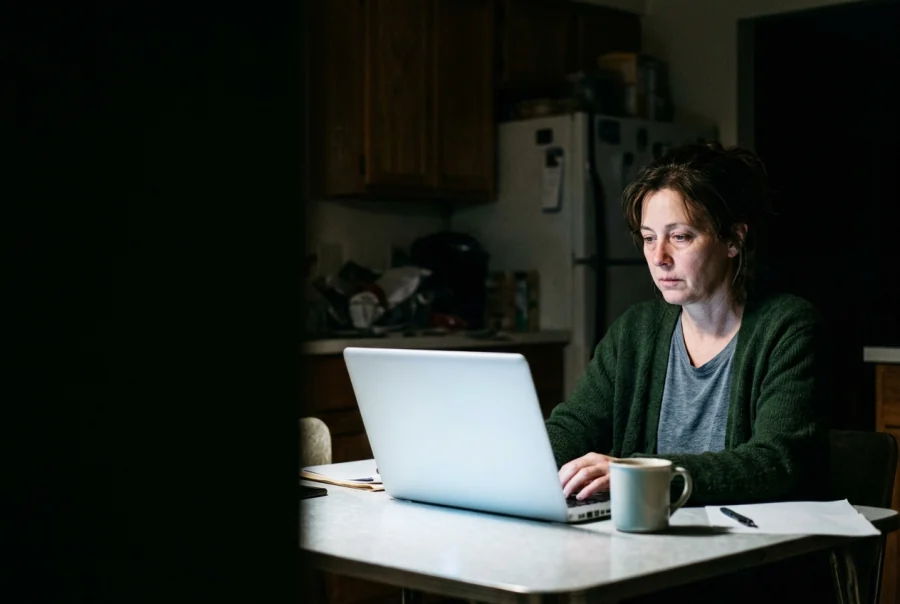
A psychiatrist at her kitchen table at night, still writing visit notes on a laptop, a mug and a stack of paper beside her and the rest of the house dark.

Four points in a clinic day. We built for all four.

A psychiatric record deserves more than a privacy policy.

01

HIPAA compliant

Encryption in transit and at rest, access controls and audit logs, on infrastructure built for protected health information.

02

BAA signed from day one

Signed on every account from the day you sign up, free trial included, so the agreement is in place before your first real session. No enterprise contract and no sales call.

03

Audio is never stored

The recording is used to write the note and then destroyed, so there is no audio library sitting on a server. The record is the note you reviewed and signed, and that stays yours.

04

Never trains on your patients

What your patients say is never used to train models, ours or anyone else's. It is written into the contract you sign, where a privacy policy cannot reach.

Psychiatry is not one panel, and a med check is not an intake

Prescribing changes what the note has to carry. Pick the practice that looks like yours.

Adult outpatient psychiatry

Built for

MD, DO

Why it is for you
A twenty-minute med check still needs a mental status exam, a medication reconciliation and a plan. The visit is short; the note is not.
What changes
  • Mental status exam written from what you observed and said out loud
  • Medication names, doses and frequencies captured without you spelling them
  • The interval history from the last visit already in front of you
How we differ
Most scribes were built for a thirty-minute primary care visit. A panel of twenty-four med checks a day breaks them, because the note has to be finished before the next patient, not at night.See the mental status exam template

PMHNPs and prescribing nurses

Built for

PMHNP-BC, APRN

Why it is for you
You prescribe, you document to a nursing standard and you often carry the panel of a full practice. Almost no tool is built with your scope in mind.
What changes
  • Notes that hold both the prescribing decision and the nursing framing
  • Supervision and collaboration notes when your state requires them
  • A signed BAA on your own account, without a group contract
How we differ
PMHNP is treated as an afterthought by tools built for physicians. Your documentation carries prescribing authority and nursing standards at the same time, and the note has to show both.See how the note is built

Child and adolescent psychiatry

Built for

Pediatric mental health

Why it is for you
Two histories in one visit: what the child says and what the parent reports, and they rarely match. The note has to keep them apart.
What changes
  • Speakers labeled separately, so the child's account and the parent's stay distinct
  • School and developmental history where it belongs, not mixed into the exam
  • Rating scales such as Vanderbilt or SNAP-IV recorded with the score you state
How we differ
A single-voice transcript flattens a family visit into one story. Separate labels are the difference between a usable note and a paragraph you have to rewrite.See session types

Addiction psychiatry and MAT

Built for

Office-based treatment with buprenorphine and naltrexone

Why it is for you
Induction, dose changes, urine screens and attendance all live in the note, and the record carries stricter privacy expectations than the rest of medicine.
What changes
  • Dose changes and induction captured as stated in the visit
  • Craving, use and abstinence recorded without you paraphrasing
  • Session audio is never stored, so the record is the note you signed and nothing else
How we differ
In this work the privacy questions are asked earlier and answered more carefully. The recording is destroyed once the note is written, and what stays in the chart is the note you reviewed, which is what a record request is about in the first place.See how data is handled

Geriatric psychiatry

Built for

Late-life and dementia care

Why it is for you
Cognitive screening, polypharmacy and a caregiver in the room. Three sources of information and one note at the end.
What changes
  • Cognitive screening results recorded with the score you say out loud
  • Long medication lists captured without transcription errors
  • Caregiver report kept separate from the patient's own account
How we differ
Polypharmacy is where transcription errors become clinical errors. Drug names and doses are captured as stated, not approximated.See the mental status exam template

Consult and inpatient psychiatry

Built for

C-L psychiatry, hospital units

Why it is for you
You write for another team to read. The consult note has to answer the question that was asked, in the format the primary service expects.
What changes
  • Consult question and recommendation as their own sections
  • Capacity and risk documented in the language a chart review looks for
  • Dictation when you are walking between units and cannot type
How we differ
A consult note is written for a reader who is not you. The structure carries the recommendation up front instead of burying it in a narrative.See custom templates

Telepsychiatry

Built for

Video-first practice

Why it is for you
The exam happens through a screen, and a third participant in the call changes what the patient is willing to say.
What changes
  • No bot joins the call. Your patient sees only you
  • Mental status observations recorded from what you state during the visit
  • Works the same on the in-person days
How we differ
Nothing enters the meeting, so there is no attendee to explain and no third party for the patient to weigh. You still ask for consent. That matters more in psychiatry than almost anywhere else.Which note format fits psychiatry

First-episode and early psychosis

Built for

Coordinated specialty care

Why it is for you
Long intakes, many informants and a treatment plan reviewed by a whole team. The documentation load is front-loaded and heavy.
What changes
  • Long intakes without you writing during the interview
  • Symptom onset and duration recorded as described
  • Team-shared templates so the chart reads the same across the program
How we differ
A ninety-minute intake is where typing costs the most. The note is drafted from the interview instead of reconstructed after it.See how the SOAP sections get written

Not on this list? It works the same for fellows, addiction medicine physicians and anyone documenting a medication visit.

The three documents psychiatry writes that therapy does not

Medication management produces paperwork a talk-therapy note never has to carry. These three are where the time goes, and all three come out of the visit itself.

01

Mental status exam

Appearance, behavior, speech, mood and affect, thought process and content, cognition, insight and judgement. The exam you narrate during the visit becomes the section, in the order your practice uses.

What comes backA complete MSE section, editable, with the observations you stated out loud.

02

Risk assessment

Suicidal and homicidal ideation, intent, plan, means and protective factors, plus what you did about it. The part of the note that gets read most closely if anything goes wrong.

What comes backIdeation, intent, plan, means, protective factors and the safety plan as separate items.

03

Prior authorization letters

The letter a payer wants before covering a medication: diagnosis, what was tried, what failed and why this drug now. Written from the visit and the chart history instead of from memory.

What comes backA draft letter with diagnosis, treatment history, failed trials and clinical rationale.

What comes back

From a twenty-minute visit to a signed note

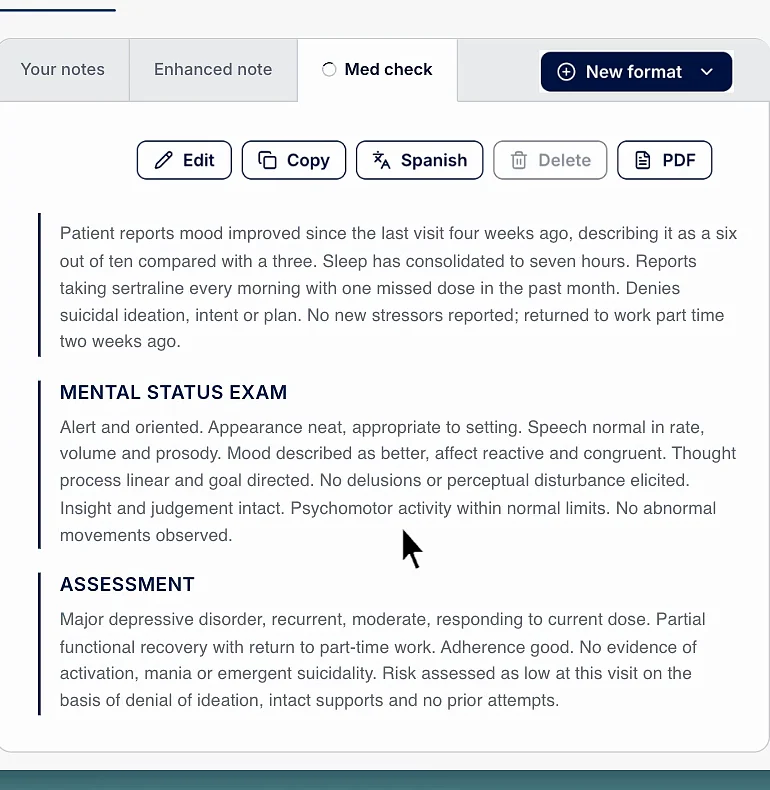
A twenty-minute follow-up for major depressive disorder, in SOAP with a mental status section. Nothing here was typed during the visit.

This is how it transcribes

Illustrative example. No real patient data. The medication name and dose are transcribed as you state them and are never calculated for you, and you review and sign every note. Risk is documented as you assessed it: the scribe does not assess risk.
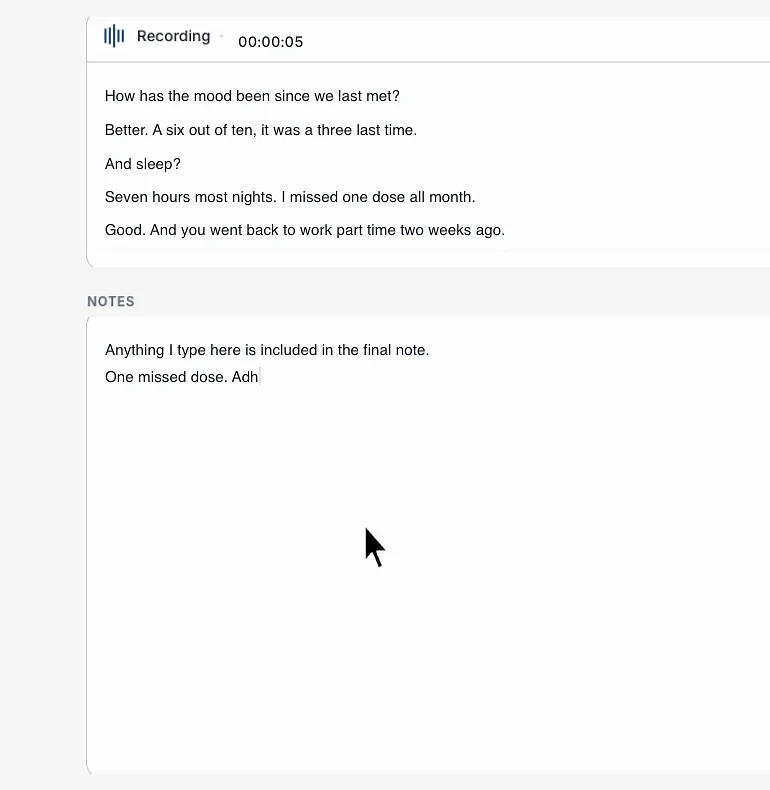
ClinicFrame recording a psychiatry visit, with the live transcript showing the patient reporting improved mood and consolidated sleep, and a free-text notes field below it.
Pricing

Meet our plans and prices

Start with a 7-day free trial, no card needed. Then one simple plan at $34.99 a month, with every feature included and nothing held back for a higher price.

Free

7-day trial

$0/month

7 days free · no card

  • Unlimited visits & transcriptions
  • SOAP / DAP / BIRP note generation
  • Custom note templates
  • Patient records & history
  • AI chat on notes & patients
  • HIPAA-compliant infrastructure
  • Support
Try it for free

No credit card required.

Starter

Monthly

$34.99/month

per user, billed monthly

  • Unlimited visits & transcriptions
  • SOAP / DAP / BIRP note generation
  • Custom note templates
  • Patient records & history
  • AI chat on notes & patients
  • HIPAA-compliant infrastructure
  • Support
Unlimited sessions, with no cap held in reserve. If that ever changes you will hear it from us first, not after.
Get Starter Plan

No hidden fees. Cancel anytime.

FAQs

Frequently Asked Questions

Does ClinicFrame write a mental status exam?

Yes. The mental status exam is generated from what you observe and state during the visit, in the order your practice uses: appearance and behavior, speech, mood and affect, thought process and content, cognition, insight and judgement. Say your observations out loud as you normally would and they land in the exam rather than in the narrative. You review and sign it like any other note.

Can it keep up with twenty or more med checks in a day?

That is the case it is built for. The note is drafted while the visit is still fresh, so it is ready before the next patient rather than waiting for the end of the day. Medication names, doses and frequencies are captured as stated, which is where most of the rewriting time goes in a short visit.

Does it capture medication names and doses correctly?

Drug names and dosages are captured as you say them, and that includes the ones that sound alike. This matters more in psychiatry than in most specialties: a wrong dose in a note is a clinical error, not a typo. Review every note before signing, the same as one you typed.

Is it built for PMHNPs, not only physicians?

Yes, and PMHNP work is treated as its own scope rather than a variation on a physician's. The note can hold the prescribing decision and the nursing framing at once, supervision and collaboration notes are supported where your state requires them, and the BAA comes with your own account without needing a group contract.

How does it handle risk assessment documentation?

Ideation, intent, plan, means, protective factors and the safety plan are captured as separate items rather than a single paragraph, because that is how a reviewer reads them. The clinical judgement stays yours: the scribe records what you assessed and decided, it does not assess risk.

What happens to the recording of a psychiatric visit?

The session audio is never stored. It is used to write the note and then destroyed, so there is no recording of a psychiatric visit sitting on a server to leak or to be requested later. Patient content is never used to train models, and that is in the contract you sign.

Can it write prior authorization letters?

It drafts them. The letter needs the diagnosis, what was already tried, what failed and why this medication now, and all of that comes from the visit and the chart history rather than from memory. You edit and sign before it goes to the payer.

Does a bot join my telepsychiatry sessions?

No. The call audio is captured on your own computer, so nothing joins the meeting and no notification tells your patient that a tool is listening. In psychiatry, where a third presence changes what a patient is willing to say, that is a deliberate design decision and not a limitation.

Have questions? We're here to help.

Leave us your message and we'll get back to you!