01
Built for protected health information
Encryption in transit and at rest, access controls and audit logs. It is the infrastructure we built for human healthcare, and your records sit on it whether or not a federal rule requires it.

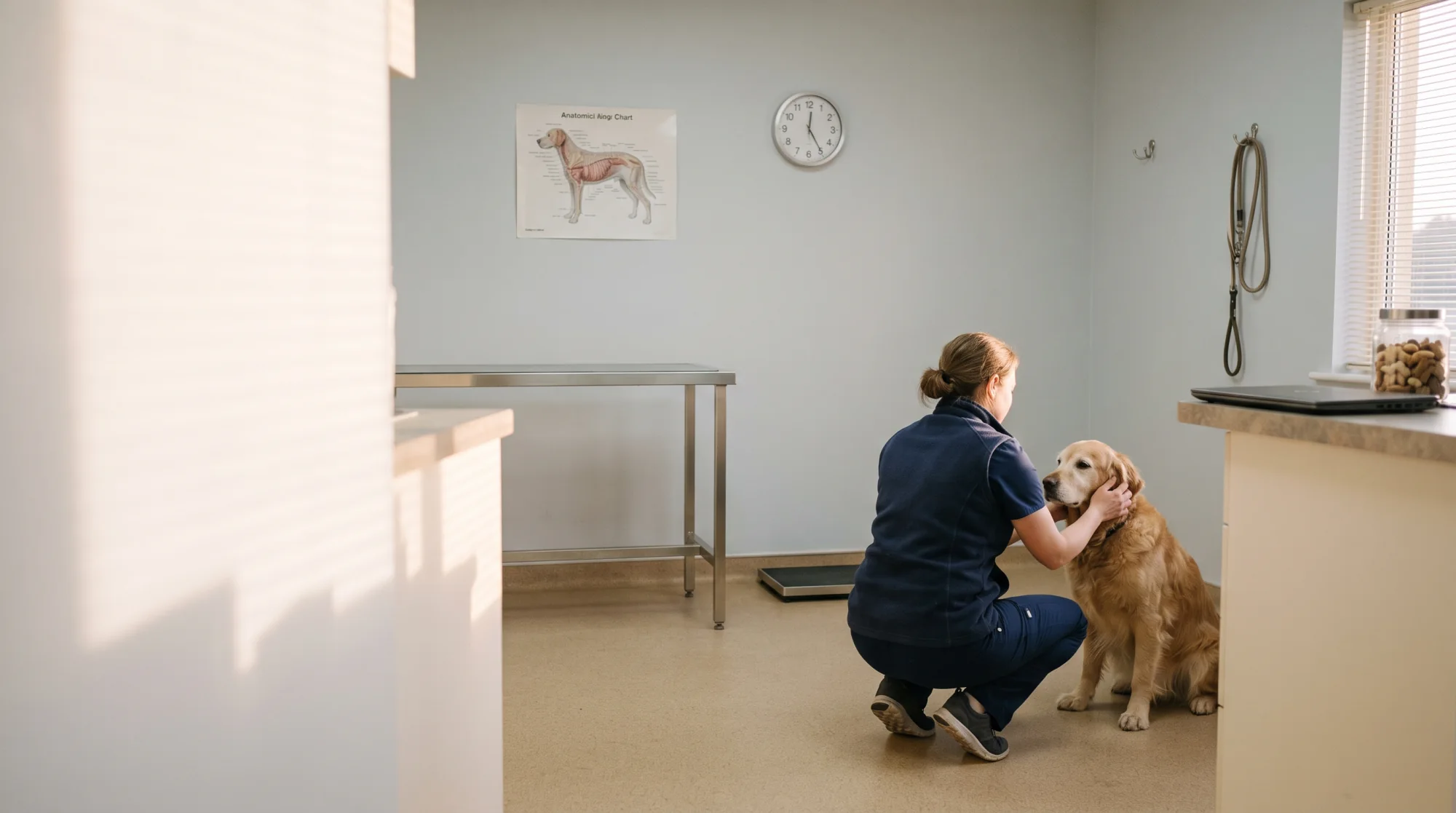
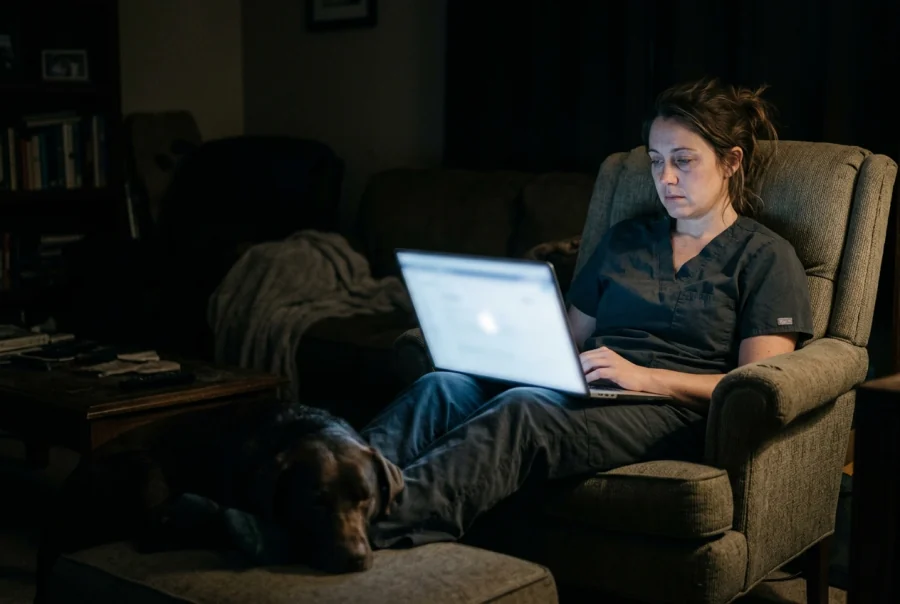
In veterinary practice the exam is already narrated out loud, to the owner, while it happens. Then the room turns over and the same findings wait to be typed a second time, from memory. Twenty-five appointments later they are still waiting, which is how the records end up on a laptop at home. The description already happened; only the record is missing.
Encryption in transit and at rest, access controls and audit logs. It is the infrastructure we built for human healthcare, and your records sit on it whether or not a federal rule requires it.
Your agreement states that ClinicFrame does not use your data for model training and discards appointment audio after processing.
The recording is used to write the record and then destroyed, so there is no audio library on a server. What remains is the record you reviewed and signed.
Nothing from your appointments is used to train models, ours or anyone else's. That covers the animal's record and your client's contact and payment details.
Small animal, equine, emergency, and surgical work produce different records. ClinicFrame keeps the species, findings, and treatment details in context.
Dogs, cats, companion animals
Spays, neuters, dentals, soft tissue
ER and overnight
Ambulatory practice
Birds, reptiles, small mammals
Internal medicine, oncology, surgery
Spay-neuter, intake, wellness
In-home visits, hospice
Build a custom template when your veterinary workflow requires different sections or instructions.
Two things make veterinary documentation its own problem: the patient cannot give a history, and the person who can is standing in the room listening to you dictate.
Subjective from the owner's account, objective from your exam, assessment and plan. Plus the fields a veterinary record needs and a human one does not: species, breed, age, weight and the doses that depend on it.
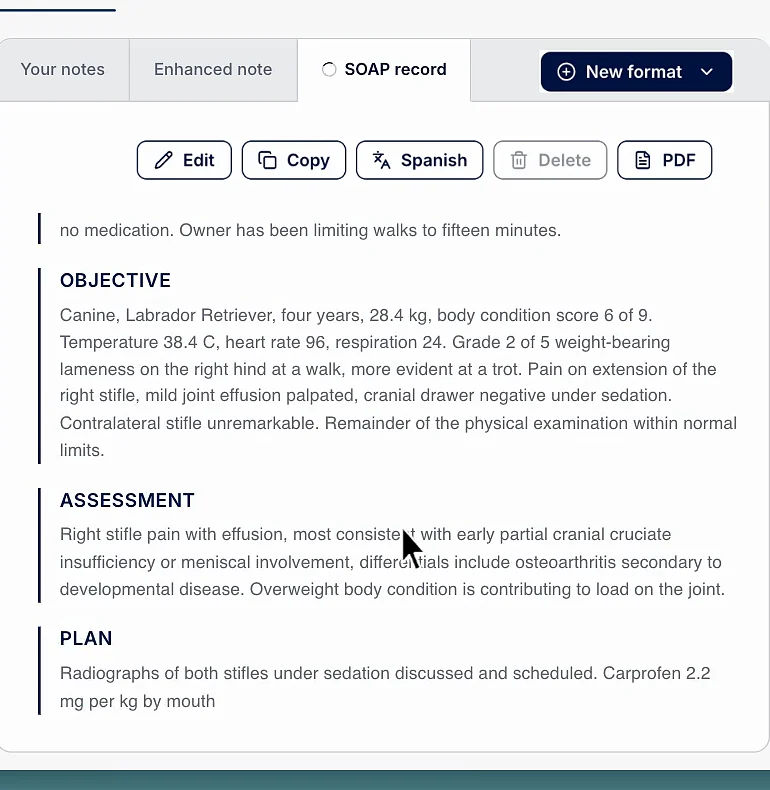
What comes backA SOAP record with species, breed, weight, vitals and weight-based dosing as stated.
Premedication, induction, maintenance, monitoring, technique, intraoperative findings and recovery, dictated during the procedure or immediately after.
What comes backA surgical record with anesthesia protocol, technique, findings and recovery notes.
The treatment plan you discussed with the owner, what it includes, and the home-care instructions you gave them when they picked the animal up.
What comes backA treatment plan and discharge instructions written from the conversation you had.
What comes back
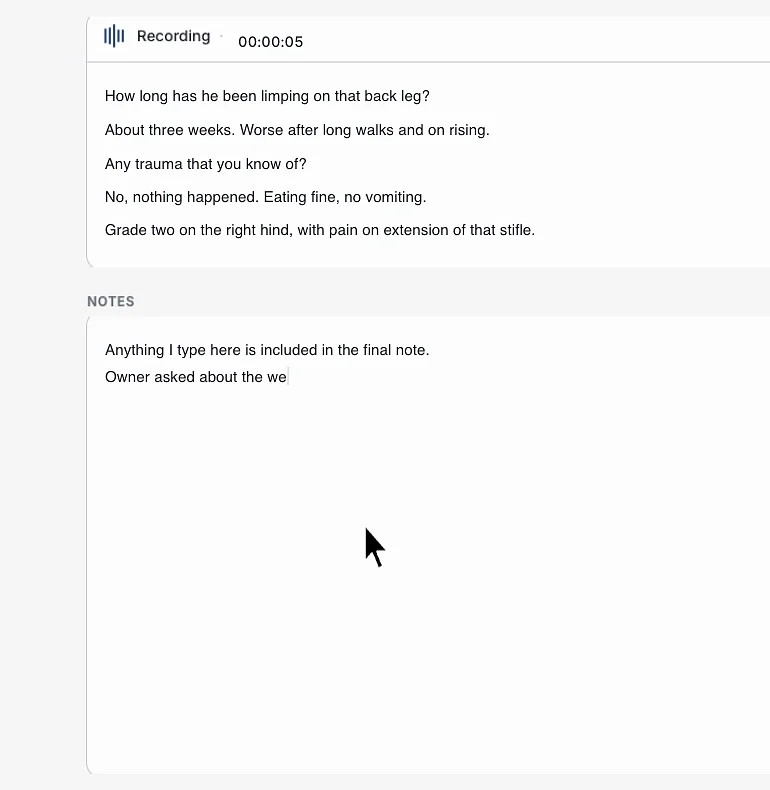
A lameness exam on a canine patient, dictated in the room. Species, breed and weight come from what you said out loud, and the dose is transcribed, never calculated.
This is how it transcribes
Illustrative example, not a real patient. The dose is transcribed exactly as you state it: the scribe does not calculate weight-based dosing and does not check it. You review and sign every record, and controlled substances still go in your separate DEA log.
Start with a 7-day free trial, no card needed. Then one simple plan at $34.99 a month, with every feature included and nothing held back for a higher price.
7-day trial
7 days free · no card
No credit card required.
Monthly
per user, billed monthly
No hidden fees. Cancel anytime.
It fits veterinary practice better than most of medicine, because the exam is already narrated out loud to the owner standing in the room. That narration is what the record is built from, so the note comes out of a conversation that was happening anyway.
No. HIPAA applies to human patient information, so a veterinary record is not protected health information and no BAA is required. What does apply is your state veterinary board's medical record requirements, and the fact that your client's contact and payment details are still personal data. We would rather say that plainly than stretch a human healthcare framework over a field where it does not apply.
ClinicFrame processes appointment audio and discards it. Your account retains the transcript, record, and client information used in your workflow. Client content is not used to train AI models.
Species, breed, weight and the doses that depend on it are captured as you state them. For exotics and avian medicine, where a general template forces the wrong fields, you can build your own structure once and apply it to every appointment after.
Yes. Premedication, induction, maintenance, monitoring, technique, intraoperative findings and recovery can be dictated during the procedure or immediately after, which is when the detail is still there. You review and sign before it enters the record.
ClinicFrame saves the session while it runs. If the connection drops in a barn or on the road, return to the saved transcript and continue. You can also dictate between calls.
Both are drafted from the conversation you actually had with the owner rather than from a generic template. That matters for the record: the instructions in the file should be the instructions the client received.
Yes, and you should. It is a draft until you sign it. The clinical judgement is yours; the scribe records what you examined, decided and told the owner.
Someone from our team will contact you.