ClinicFrame on Product HuntClinicFrame Scribe is live on Product Hunt.Like Granola, but for healthcare. Fully HIPAA-compliant.Support us
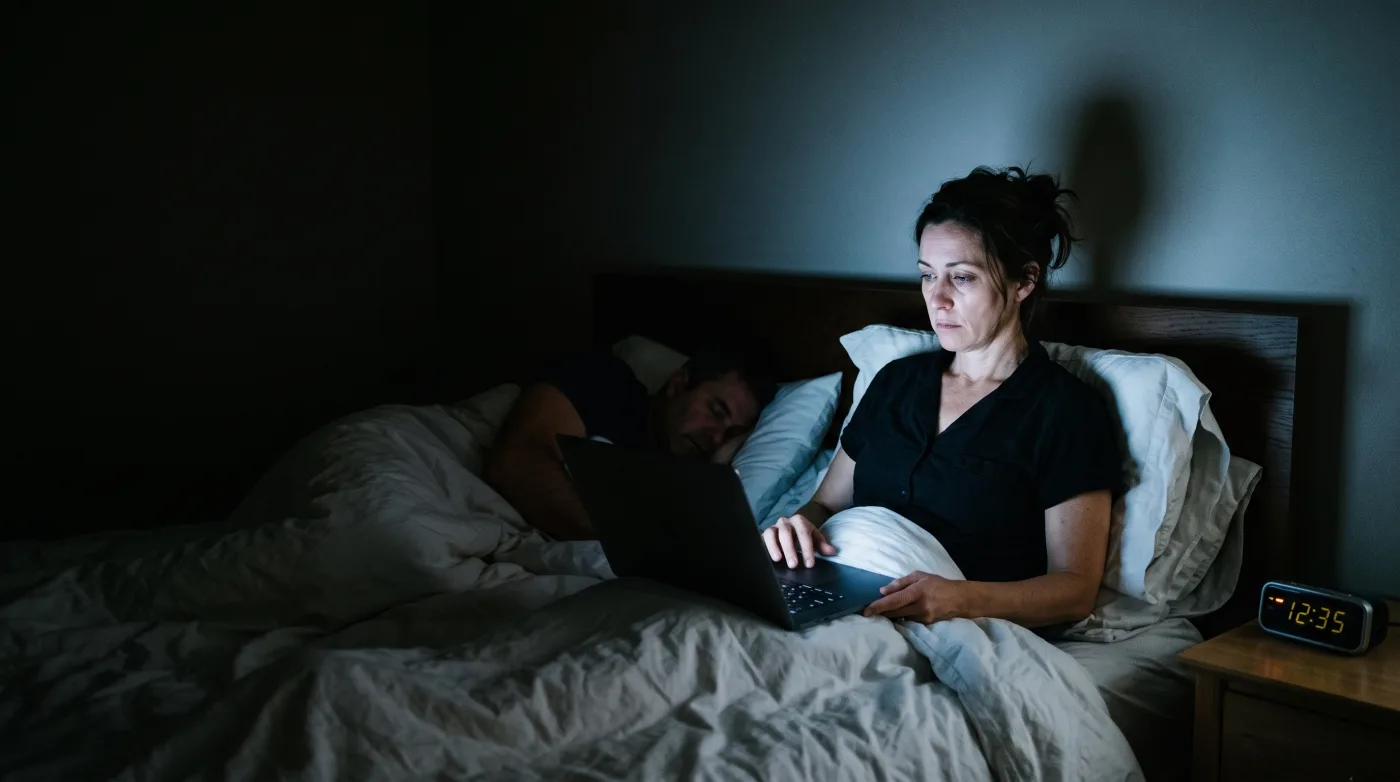
A therapist alone in his office after the last session, looking away from the laptop on his desk, with the wall clock past five.

AI therapy notes for mental health practice

You do the caring.
We do the note-taking.

ClinicFrame listens to the session and writes the clinical note in your format, DAP, BIRP, SOAP or progress. For therapy and psychiatry, in person, on telehealth, or by dictation.

Try it for freeNo credit card. 7 days free.
Sound familiar?

Your day ends at five. The documentation does not.

A fifty-minute session can cost another hour: the structured note, the summary, the documentation a payer will accept without asking twice. None of that is the work you trained for, and all of it waits for you after the last client leaves.

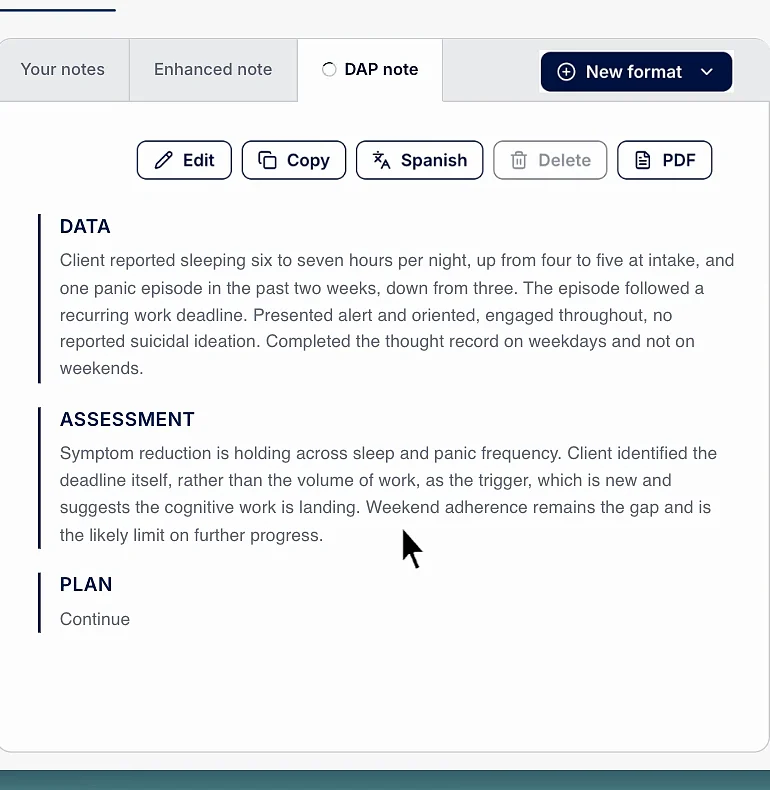
A therapist typing session notes in bed at 12:35 at night, her partner asleep beside her, the laptop the only light in the room.

Four points in your day. We built for all four.

The session stays between you and your client.

01

HIPAA compliant

Encryption in transit and at rest, access controls and audit logs, on infrastructure built for protected health information.

02

BAA signed from day one

Signed on every account from the day you sign up, free trial included, so the agreement is in place before your first real session. No enterprise contract and no sales call.

03

Audio is never stored

The recording is used to write the note and then destroyed, so there is no audio library sitting on a server. The record is the note you reviewed and signed, and that stays yours.

04

Never trains on your clients

What your clients say is never used to train models, ours or anyone else's. It is written into the contract you sign, where a privacy policy cannot reach.

Mental health is not one job, and one note format never fit it

Every kind of mental health practice writes notes differently. Pick the one that sounds like your week.

Private practice therapists

Built for

Therapists, psychologists, LPCs, LCSWs

Why it is for you
You are the practice. The therapy notes, the insurance claim and the reschedule all land on you, and they land after the last client leaves.
What changes
  • DAP, BIRP, SOAP or a template you build once
  • The draft is waiting before your next client sits down
  • Unlimited sessions on a single price
How we differ
DAP and BIRP are native formats here, not a SOAP note with the labels swapped.Read the honest scribe comparison

Psychiatry and PMHNP

Built for

Psychiatrists, PMHNPs, medication management

Why it is for you
Medication management is not a summary. Whoever reads the chart next is looking for the mental status exam, the dose and the plan, in that order.
What changes
  • Mental status exam captured from the session
  • Medication, dose and frequency in their own section
  • Follow-up letters drafted from the same recording
How we differ
The note is structured like a psychiatric chart, not like a generic visit summary.See how the note is built

Group practices and clinics

Built for

Teams of three to thirty

Why it is for you
Twelve clinicians write twelve different ways. When someone covers a session, the chart has to read the same as always.
What changes
  • One shared template across the whole team
  • Consistent charts for supervision and audit
  • New hires write in your format from day one
How we differ
Templates are built once and shared, so consistency does not depend on retraining people.See custom templates

Addiction medicine and SUD

Built for

Substance use treatment

Why it is for you
Your records carry stricter privacy expectations than the rest of medicine. Documentation has to hold up to that standard, and a privacy policy is not where it holds.
What changes
  • Session audio is never stored, so the record is the note you signed and nothing else
  • Assessment language that fits substance use treatment
  • A signed BAA on every account
How we differ
In this work the privacy questions get asked earlier and answered more carefully. The recording is destroyed once the note is written, and what stays in the chart is the note you reviewed.See how data is handled

Couples and family therapy

Built for

LMFTs and systemic work

Why it is for you
There are two or more people in the room. Couples and family therapy notes have to reflect the system, not flatten everyone into one voice.
What changes
  • Speakers labeled separately in the transcript
  • Relational language kept instead of summarized away
  • One session note, or one per client, as your chart requires
How we differ
Speaker labels survive into the note, so who said what does not collapse into a single paragraph.Compare DAP, BIRP and SOAP

Child and adolescent therapy

Built for

Play therapy, school-age work

Why it is for you
The session is play therapy and the note is clinical. On top of that, a parent was in the room for part of it and not for the rest.
What changes
  • Parent-present and child-only segments kept apart
  • Developmental language instead of adult phrasing
  • Summaries you can share with a school or a caregiver
How we differ
The note keeps the difference between what the child said and what the caregiver reported.See BIRP notes with examples

Group therapy

Built for

IOP, PHP and open groups

Why it is for you
One group therapy session, eight participants, and each one needs their own progress note before the day ends.
What changes
  • A group note plus an individual note per participant
  • Attendance and participation captured as you go
  • The shared theme written once, the individual response written for each
How we differ
One recording becomes the group note and every individual note, instead of writing the same session eight times.See the note formats

Trauma-focused and EMDR

Built for

Phase-based protocols

Why it is for you
EMDR and other phase-based protocols need the phase, the target memory and the scores in the note, or the next session starts from nowhere.
What changes
  • Phase and target memory recorded in the note
  • Subjective units of distress kept where they belong
  • No audio of a trauma session left on a server
How we differ
The structure follows the protocol you are running, not a generic progress note.See progress notes

Not on this list? It works the same for trainees, school counselors and anyone writing a progress note after a session.

What comes back

From the room to the note you sign

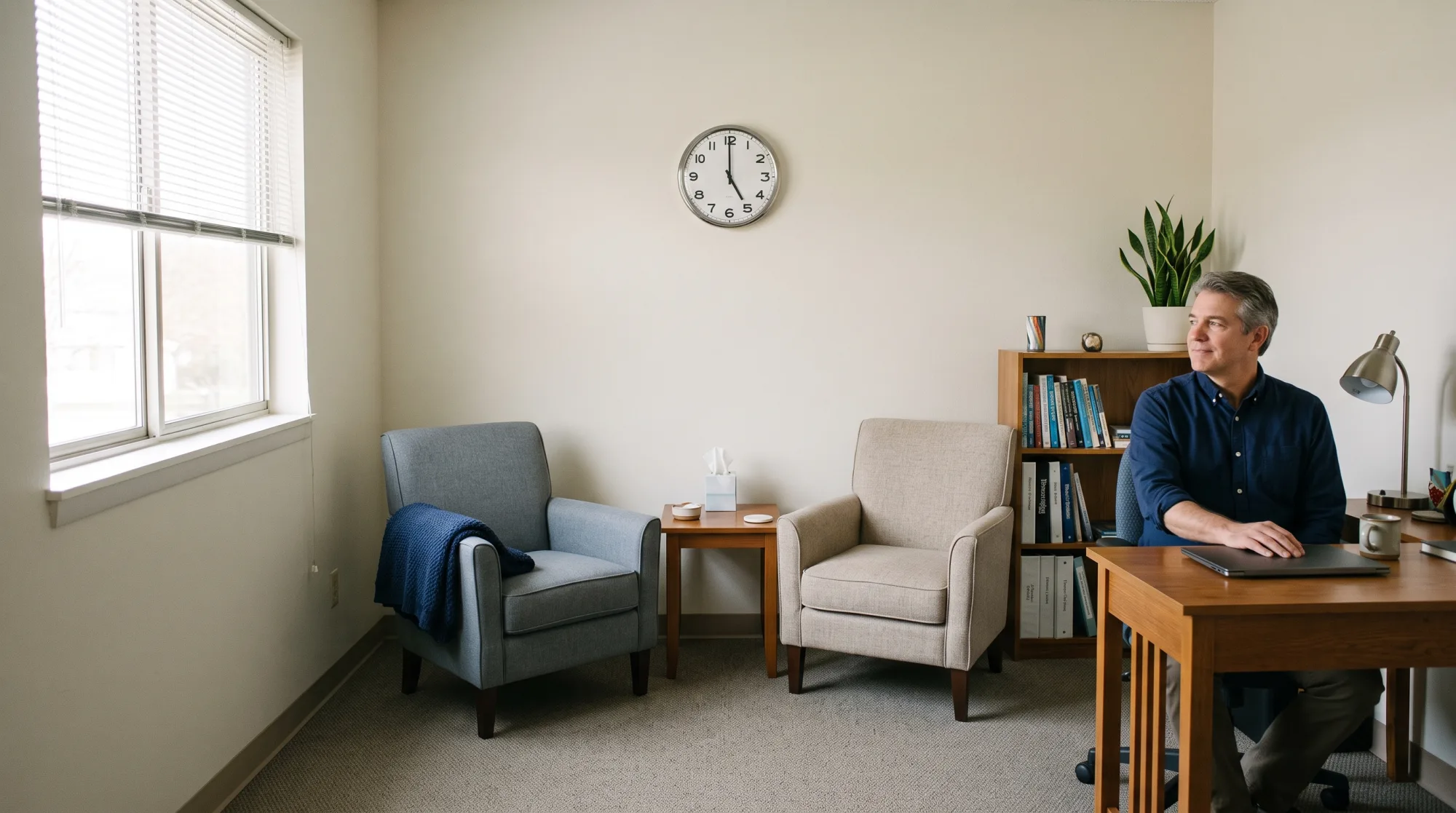
A weekly individual session for generalized anxiety, in DAP. The headings are the ones you set. The content comes from what was said in the room.

This is how it transcribes

Illustrative example. No real client data. You review and sign every note, and you can rewrite the same session as BIRP or SOAP without recording again.
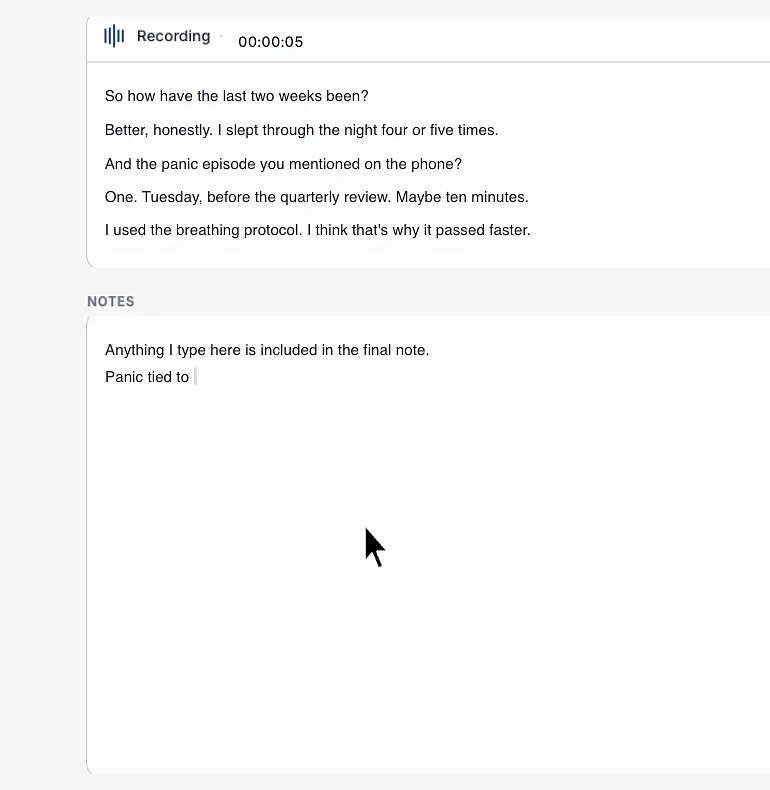
ClinicFrame recording a therapy session, with the live transcript showing the client reporting improved sleep and one panic episode, and a free-text notes field below it.
Pricing

Meet our plans and prices

Start with a 7-day free trial, no card needed. Then one simple plan at $34.99 a month, with every feature included and nothing held back for a higher price.

Free

7-day trial

$0/month

7 days free · no card

  • Unlimited visits & transcriptions
  • SOAP / DAP / BIRP note generation
  • Custom note templates
  • Patient records & history
  • AI chat on notes & patients
  • HIPAA-compliant infrastructure
  • Support
Try it for free

No credit card required.

Starter

Monthly

$34.99/month

per user, billed monthly

  • Unlimited visits & transcriptions
  • SOAP / DAP / BIRP note generation
  • Custom note templates
  • Patient records & history
  • AI chat on notes & patients
  • HIPAA-compliant infrastructure
  • Support
Unlimited sessions, with no cap held in reserve. If that ever changes you will hear it from us first, not after.
Get Starter Plan

No hidden fees. Cancel anytime.

FAQs

Frequently Asked Questions

Which therapy note formats does it write, and can I use my own template?

ClinicFrame writes DAP notes and BIRP notes natively, plus SOAP notes, intake assessments, treatment plan updates and session progress notes. If your documentation does not fit any of those, you build a custom template section by section, name the sections the way you already name them, and reuse it on every session. A group practice can share one template across the whole team, so charts read the same whoever wrote them. You choose the format per session, so an intake and a twenty-minute check-in do not come out looking alike.

Can I use it for telehealth sessions?

Yes, and no bot joins the call. There is no extra participant in the waiting room, no name in the attendee list and nothing for your client to wonder about mid-session. It works the same in person, with a laptop or phone on the desk, and you can also dictate after the session if you would rather have nothing running while you work. You still ask for consent, the same as with any recording, and after that it is a laptop on the desk rather than a third party in the room.

Is it HIPAA compliant, and what happens to my clients' data?

ClinicFrame runs on HIPAA-compliant infrastructure with a signed BAA on every account from the day you sign up, free trial included, so you are covered before your first real session and there is no enterprise contract or sales call to get there. That matters more than it sounds: using any scribe with client information before the BAA is in place is itself a HIPAA violation, which is why we do not hold it back for a paid plan. The session audio is never stored: it is used to write the note and then destroyed, so there is no audio library on a server. What remains is the note you reviewed and signed, which is your clinical record. Client content is never used to train models, ours or anyone else's, and that is written into the agreement you sign, not only into a privacy policy. This is practical guidance, not legal advice.

Do I need my client's consent to use it?

Yes, and it is worth getting right rather than fast. Consent is yours to obtain, to the standard your license and your state set. Several states require every party to consent, among them California, Washington, Illinois, Pennsylvania, Massachusetts, Maryland and Florida, so your own agreement to record is not enough there. In couples, family and group work each person in the room consents, not only the person who booked the appointment. Two things make that conversation short: nothing joins the call, so there is no participant to explain, and the session audio is destroyed once the note is written, so what you are asking permission for is a clinical note rather than a recording that outlives the session. None of this is legal advice.

Does it handle couples, family and group sessions?

Yes. Speakers are labeled separately, so a couples or family session does not collapse into one voice and you can still tell who said what when you write the note. For group therapy you can produce a group note plus an individual note for each participant, which is the part that takes longest by hand. Multi-person sessions are where a scribe saves the most time, because the volume of what was said is highest exactly when your memory of it is worst.

What happens if something interrupts the session?

The session is saved while it runs, not at the end. If the app closes, the laptop sleeps or the connection drops, it comes back where it was instead of leaving you to rebuild fifty minutes from memory. Whatever happens, we never lose a transcript of yours. It is the difference people notice most after having lost one somewhere else.

Will the note hold up if a payer asks for it, and do I still review it?

The clinical note carries what reviewers look for: date, duration, session type, presenting concerns, interventions, client response and plan, in the format your practice uses, which is what supports medical necessity when a claim is questioned. Whether a specific claim is approved is between you and the payer, but the documentation is not the weak link. And yes, you review and sign every note, the same as one you typed yourself. The clinical judgment stays with you: this is documentation support, not a second clinician.

How much does it cost?

There is a 7-day free trial with no card required. After that it is $34.99 per user per month with unlimited sessions, or $27.99 per month billed yearly. The BAA is included on every account, and so is every feature: no higher tier holds back the note format you needed.

Give the hour to the client, not to the paperwork

Try it for free

Have questions? We're here to help.

Leave us your message and we'll get back to you!