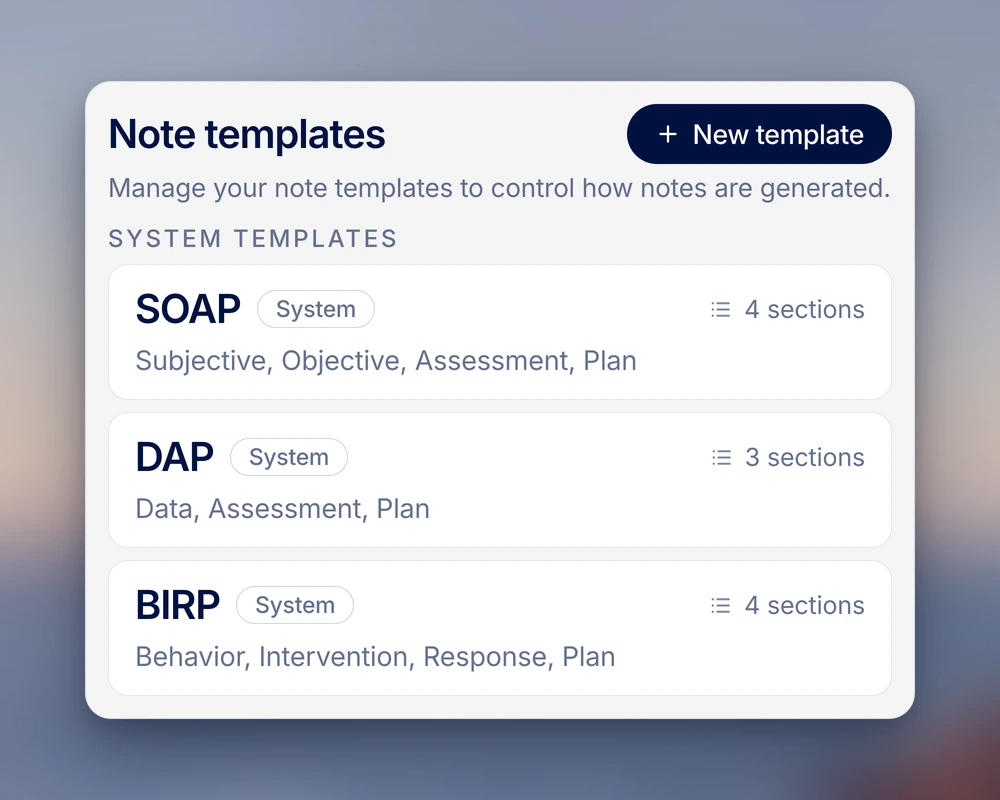
BIRP stands for Behavior, Intervention, Response and Plan. It is a progress note format used in behavioral health because it forces the note to answer a question a reviewer actually asks: what did the clinician do, and what did it produce. The examples below are complete notes, not fragments, for three different kinds of session.
What goes in each BIRP section?
| Section | What it captures |
|---|---|
| Behavior | What the client reported and what you observed, including mental status and any change since the last session |
| Intervention | What you did in session: the modality, the technique, the specific work done |
| Response | How the client responded to that intervention, in session and to homework from the last one |
| Plan | Homework, the focus of the next session, frequency, and any coordination or referral |
Download blank template (PDF)Free, no signup required.
BIRP note example: individual therapy
Weekly individual session, generalized anxiety, cognitive behavioral work.
- Behavior. Client reported sleeping six to seven hours per night, up from four to five at intake. One panic episode in the past two weeks, down from three, triggered by a recurring work deadline. Presented alert and oriented, engaged throughout, no reported suicidal ideation.
- Intervention. Reviewed the thought record completed between sessions. Traced the cognitive chain around the work deadline and reinforced the distinction between workload and evaluation as the trigger. Practiced paced breathing in session for six minutes.
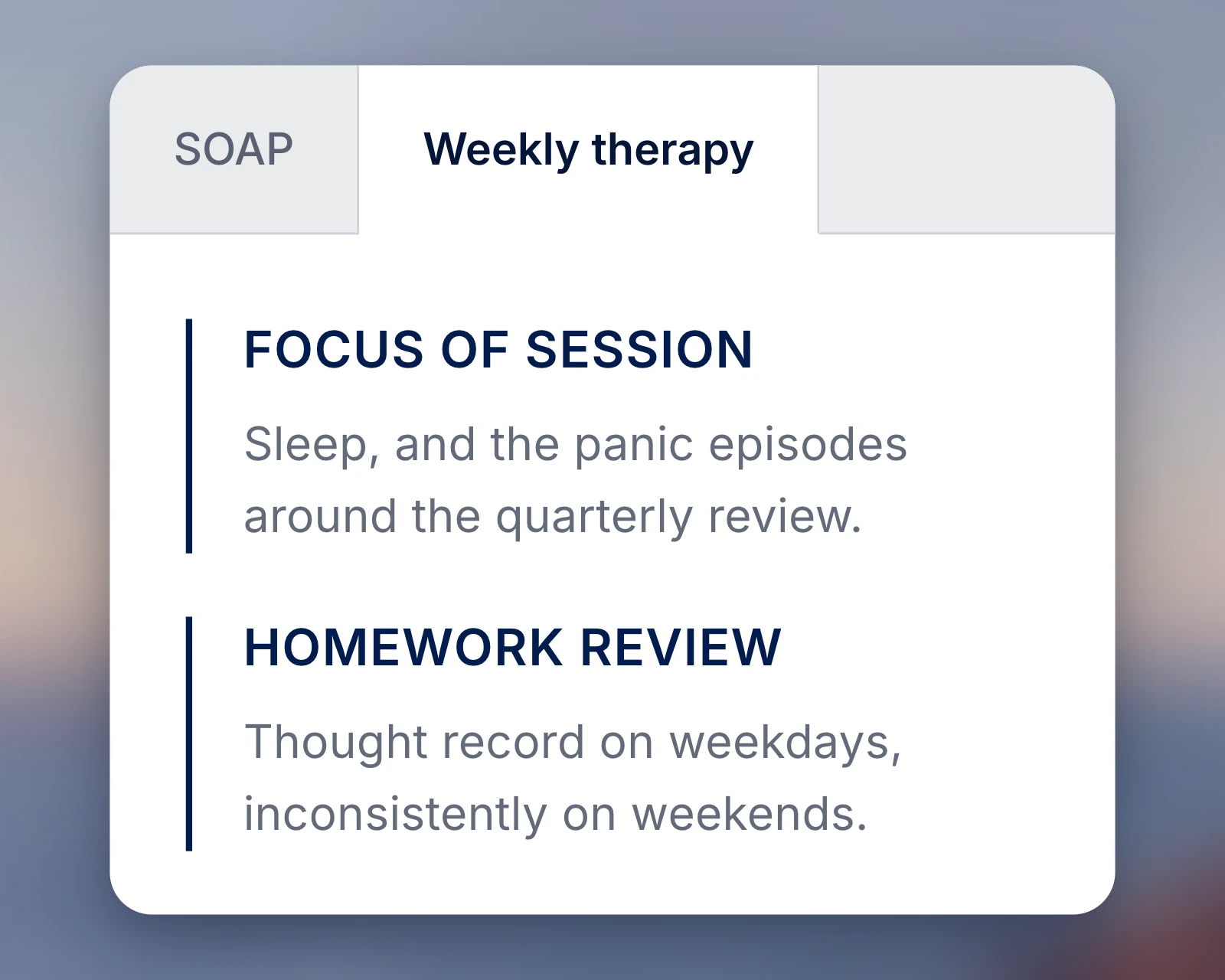
- Response. Client identified the deadline itself, rather than the volume of work, as the trigger, which is new. Reported shorter episode duration when using the breathing protocol. Adherence to the thought record was consistent on weekdays and inconsistent on weekends.
- Plan. Continue weekly sessions. Daily thought record including weekends. Use the breathing protocol at the first sign of escalation rather than at peak. Add a fifteen-minute walk before bed. Next session reviews the weekend gap.
BIRP note example: couples therapy
Biweekly couples session, communication and conflict repair. Both partners present.
- Behavior. Partners reported two arguments since the last session, both beginning over household logistics and escalating to criticism. Partner A described withdrawing; Partner B described pursuing. Both were able to describe the pattern without interrupting each other, which was not the case three sessions ago.
- Intervention. Named the pursue and withdraw cycle out loud and mapped one argument onto it in session. Ran a structured speaker and listener exercise on the household logistics topic, with the clinician interrupting escalation twice.
- Response. Partner A completed the listener turn without leaving the room, a first. Partner B was able to state a request instead of a complaint on the second attempt. Both reported the exercise felt artificial and also that the topic ended without escalation.
- Plan. Biweekly sessions continue. One structured conversation at home per week on a low-stakes topic, twenty minutes, timer-bound. Partner A to signal the urge to withdraw rather than acting on it. Next session repeats the exercise on a higher-stakes topic.
BIRP note example: substance use treatment
Weekly individual session in an outpatient program, alcohol use disorder, early recovery.
- Behavior. Client reported eleven days without alcohol use and one episode of craving on day nine following contact with a former drinking companion. Attended two of three planned support meetings. Presented with improved grooming and steadier speech compared with intake. Denied withdrawal symptoms.
- Intervention. Reviewed the craving episode in detail and identified the contact as a high-risk cue. Built a written refusal script for that specific relationship. Reviewed the gap in meeting attendance without confrontation and problem-solved the scheduling conflict behind it.
- Response. Client volunteered that the craving passed in under twenty minutes after leaving the setting, which he had not previously recognized as a coping success. Accepted the refusal script and rehearsed it once. Pushed back on the third weekly meeting and agreed to two.
- Plan. Weekly individual sessions continue. Two support meetings per week, chosen for the schedule that failed. Use the refusal script if contact repeats. Track craving episodes with duration. Next session reviews cues beyond that relationship.
See How ClinicFrame Writes Your BIRP Notes
The template above is a starting point to fill in by hand. Record the actual session, and ClinicFrame drafts the BIRP note automatically, in the same four sections.
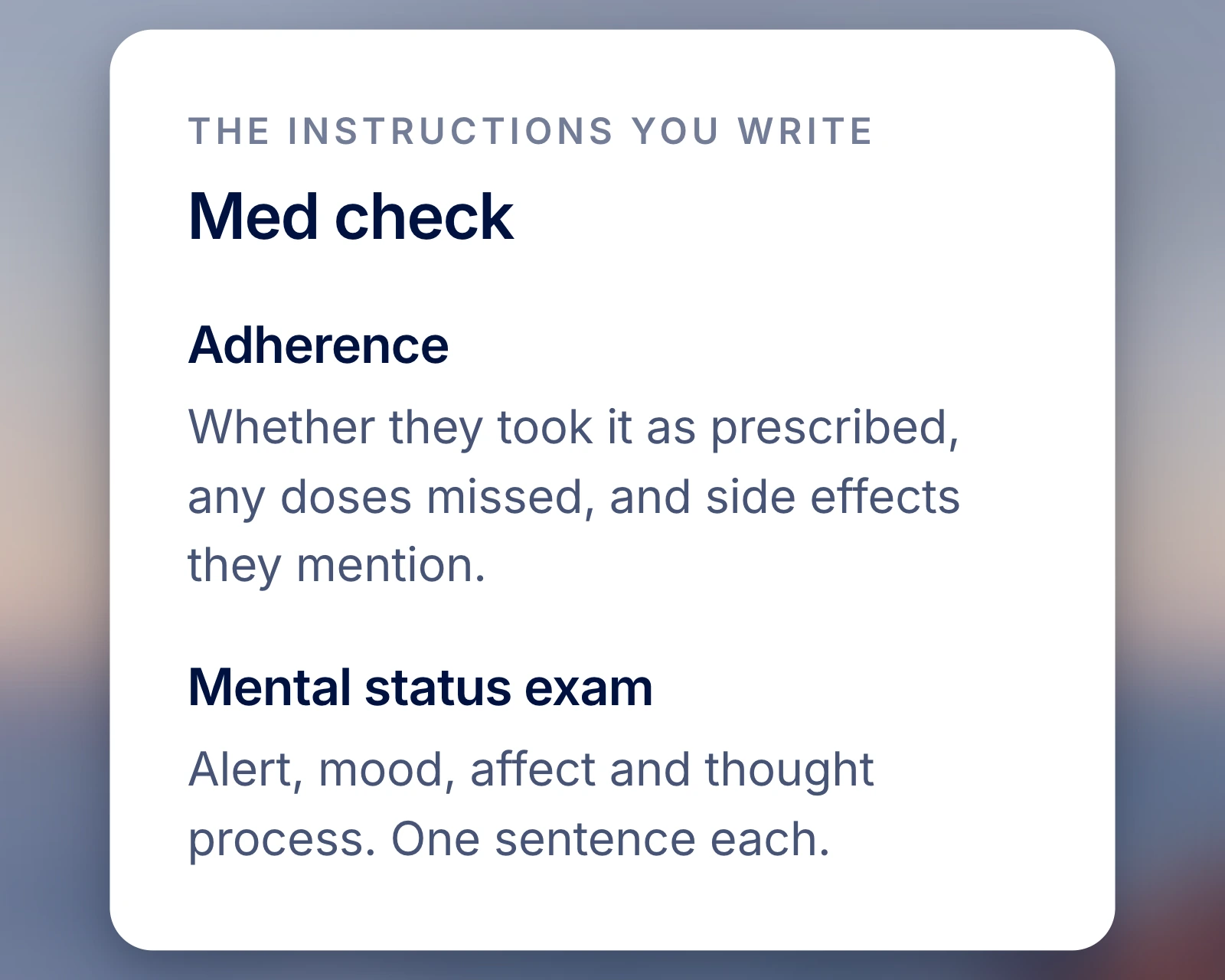
Set SOAP, DAP, or BIRP as the default once, write instructions for any section worth changing, and every future session comes back the same way.